Goals: “Goals gives us direction to act in definite way, if there is in goals we are aware “what” we are doing and “why” we are doing it”.
Education: “Education is the process of receiving or giving systematic instruction, especially at school or any other institute”
Psychology: “Psychology is the scientific study of behaviour and mental process of organism”
Education psychology: “It is branch of psychology which deal with teaching and learning it takes it’s meaning from education, social process and from psychology a behavioral science” (SKINNER) Education psychology help to develop interest and solve problems in education system
Goals of education psychology:
Education psychology help the students in education and help teacher to understand human nature, teacher may be able to the motivate and direct the learning
Education psychology effects changing the learners thoughts, feelings, attitudes, ideas, standards of the values and conducts towards education
Education psychology improve the Quality of instruction in students
Education psychology promote the development of personality, talents, mental and physical abilities in students
Develop strategies that help resolve problems which affects the health development of person
It focus on the help of gifted students thorse have disabilities ( through education psychology teacher recognize children’s disability and than teacher teach and guide gifted students effectively)
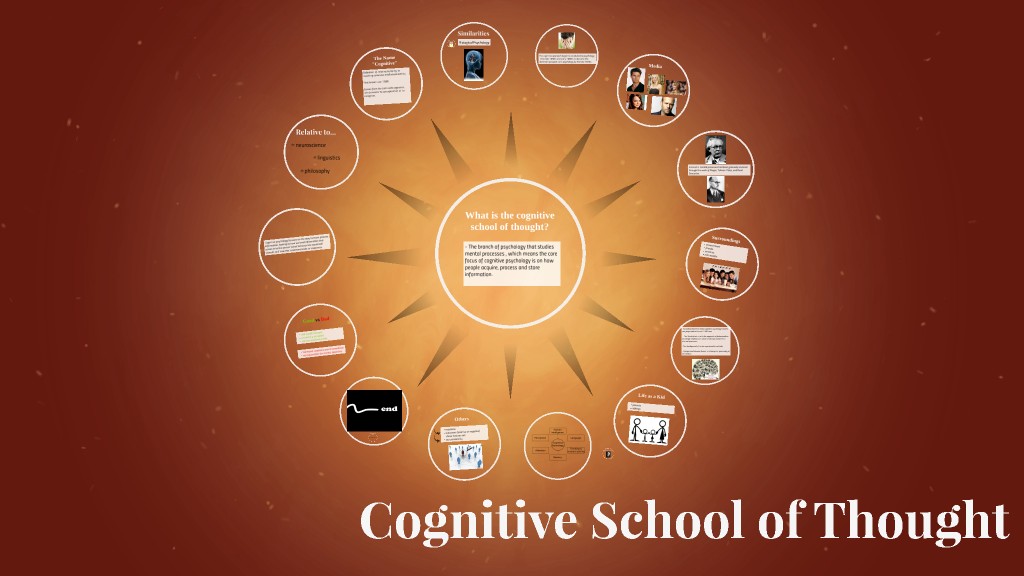
The Cognitive School of Psychology
Cognitive psychology is the school of psychology that studies mental processes including how people think, perceive, remember and learn. As part of the larger field of cognitive science, this branch of psychology is related to other disciplines including neuroscience, philosophy, and linguistics.
Cognitive psychology began to emerge during the 1950s, partly as a response to behaviorism. Critics of behaviorism noted that it failed to account for how internal processes impacted behavior. This period is sometimes referred to as the “cognitive revolution” as a wealth of research on topics such as information processing, language, memory, and perception began to emerge.
What Is Cognitive Psychology? Cognitive psychology involves the study of internal mental processes—all of the things that go on inside your brain, including perception, thinking, memory, attention, language, problem solving, and learning. While it is a relatively young branch of psychology, it has quickly grown to become one of the most popular subfields.
There are numerous practical applications for this cognitive research, such as providing help coping with memory disorders, increasing decision-making accuracy, finding ways to help people recover from brain injury, treating learning disorders, and structuring educational curricula to enhance learning cognitive psychology have also improved our understanding of how people form, store, and recall memories. By knowing more abo!out how these processes work, psychologists can develop new ways of helping people improve their memories and combat potential memory problems. For example, psychologists have found that while your short-term memory is quite short and limited (lasting just 20 to 30 seconds and capable of holding between five and nine items), rehearsal strategies can improve the chances that information will be transferred to long-term memory, which is much more stable and durable.
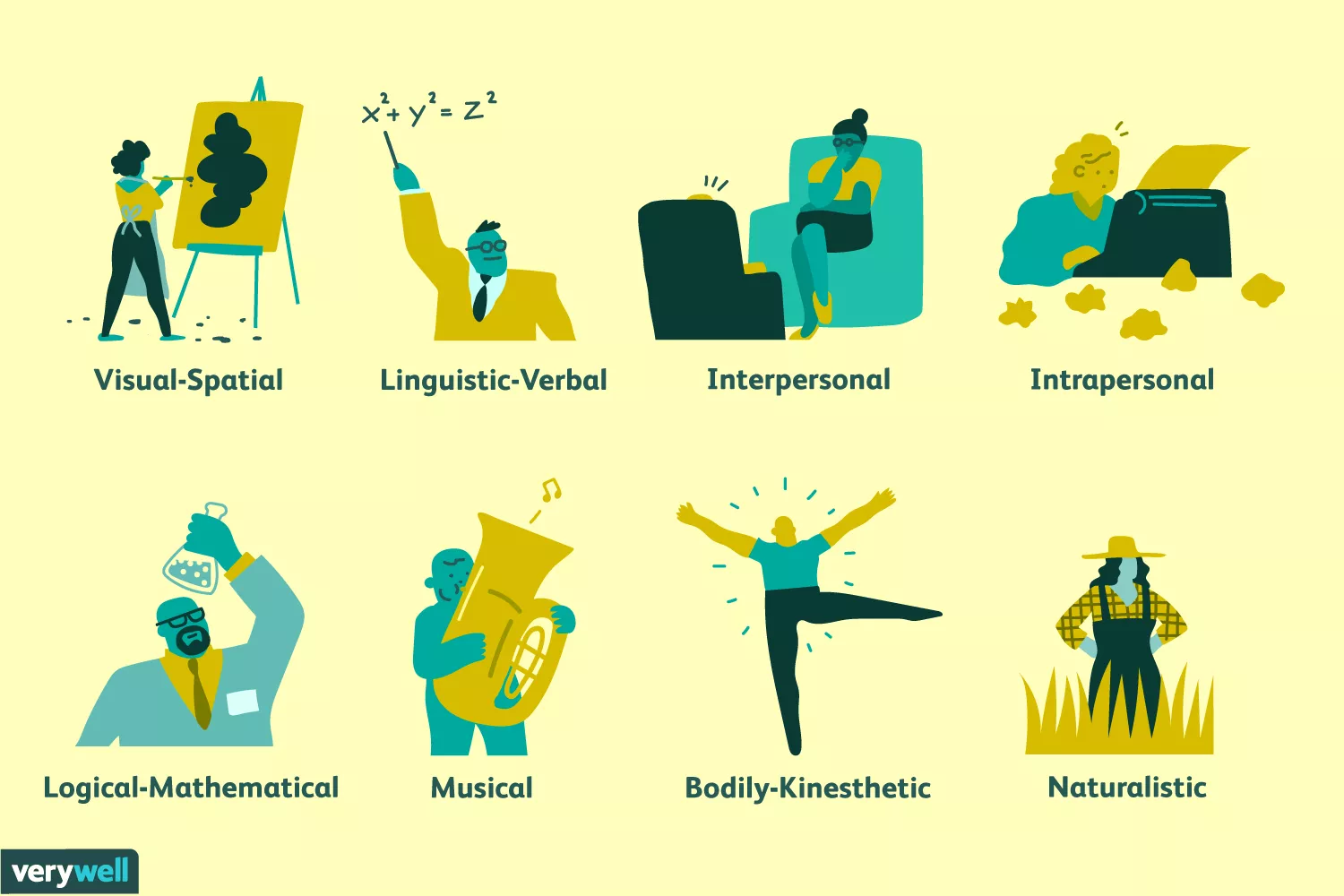
The theory of multiple intelligence was developed in 1983 by Dr. Howard Gardner, professor of education at Harvard University. It suggests that the traditional notion of intelligence, based on I.Q. testing, is far too limited. Instead, Dr. Gardner proposes eight different intelligence to account for a broader range of human potential in children and adults. These intelligences are:
Visual-Spatial Intelligence
Linguistic-Verbal Intelligence
Logical-Mathematical Intelligence
Bodily-Kinesthetic Intelligence
Musical intelligence
Interpersonal intelligence
Intrapersonal intelligence
Naturalist intelligence
NOTE: Howard Gardner also suggested the possible addition of a ninth knows as “Existentialist intelligence“
Visual-Spatial Intelligence
Strengths: Visual and spatial judgment
People who are strong in visual-spatial intelligence are good at visualizing things. These individuals are often good with directions as well as maps, charts, videos, and pictures.
Characteristics
Characteristics of visual-spatial intelligence include:
Enjoys reading and writing
Good at putting puzzles together
Good at interpreting pictures, graphs, and charts
Enjoys drawing, painting, and the visual arts
Recognizes patterns easily
2. Linguistic-Verbal Intelligence
Strengths: Words, language, and writing
People who are strong in linguistic-verbal intelligence are able to use words well, both when writing and speaking. These individuals are typically very good at writing stories, memorizing information, and reading.
Characteristics
Characteristics of linguistic-verbal intelligence include:
Good at remembering written and spoken information
Enjoys reading and writing
Good at debating or giving persuasive speeches
Able to explain things well
Often uses humor when telling stories
3. Logical-Mathematical Intelligence
Strengths: Analyzing problems and mathematical operations
People who are strong in logical-mathematical intelligence are good at reasoning, recognizing patterns, and logically analyzing problems. These individuals tend to think conceptually about numbers, relationships, and patterns.
Characteristics
Characteristics of logical-mathematical intelligence include:
Excellent problem-solving skills
Enjoys thinking about abstract ideas
Likes conducting scientific experiments
Good at solving complex computations
4. Bodily-Kinesthetic Intelligence
Strengths: Physical movement, motor control
Those who have high bodily-kinesthetic intelligence are said to be good at body movement, performing actions, and physical control. People who are strong in this area tend to have excellent hand-eye coordination and dexterity.
Characteristics
Characteristics of bodily-kinesthetic intelligence include:
Good at dancing and sports
Enjoys creating things with his or her hands
Excellent physical coordination
Tends to remember by doing, rather than hearing or seeing
5. Musical intelligence
Strengths: Rhythm and music
People who have strong musical intelligence are good at thinking in patterns, rhythms, and sounds. They have a strong appreciation for music and are often good at musical composition and performance.
Characteristics
Characteristics of musical intelligence include:
Enjoys singing and playing musical instruments
Recognizes musical patterns and tones easily
Good at remembering songs and melodies
Rich understanding of musical structure, rhythm, and notes
6. Interpersonal intelligence
Strengths: Understanding and relating to other people
Those who have strong interpersonal intelligence are good at understanding and interacting with other people. These individuals are skilled at assessing the emotions, motivations, desires, and intentions of those around them.
Characteristics
Characteristics of interpersonal intelligence include:
Individuals who are strong in intrapersonal intelligence are good at being aware of their own emotional states, feelings, and motivations. They tend to enjoy self-reflection and analysis, including daydreaming, exploring relationships with others, and assessing their personal strengths.
Characteristics
Characteristics of intrapersonal intelligence include:
Good at analyzing his or her strengths and weaknesses
Enjoys analyzing theories and ideas
Excellent self-awareness
Clearly understands the basis for his or her own motivations and feelings
8. Naturalist intelligence
Strengths: Finding patterns and relationships to nature
Naturalistic is the most recent addition to Gardner’s theory and has been met with more resistance than his original seven intelligences. According to Gardner, individuals who are high in this type of intelligence are more in tune with nature and are often interested in nurturing, exploring the environment, and learning about other species. These individuals are said to be highly aware of even subtle changes to their environments.
Characteristics
Characteristics of naturalistic intelligence include:
Interested in subjects such as botany, biology, and zoology
Good at categorizing and cataloging information easily
May enjoy camping, gardening, hiking, and exploring the outdoors
Doesn’t enjoy learning unfamiliar topics that have no connection to nature
 gardner.video.blog